
Black Mould in Calgary Homes: Causes, Signs, and What to Do

Black mould, for any homeowner, is a terrifying sight. Spots of it on a basement floor or wall, bathroom, ceiling, or on a wall can leave you wondering what to do. Calgary residences are exposed to moisture from leaks, condensation, flooding, and wet spots due to poor ventilation or dampness in walls or ceilings that encourage mould growth. When black mould occurs, moisture must be removed, and experts should be notified to make certain that black mould removal will take place before the issue becomes worse. HazPro Restoration offers its professional services to help restore your property by providing expert mould removal and remediation, locating and eliminating sources of moisture, and treating all mold-infested surfaces. What Is Black Mould? “Black mould” is a general and often misused term that refers to any mould that has a colour similar to the hue of the inside of a black marker. While there is a specific type of mould called “black mould,” there are other types that can look black, or appear black and must be evaluated to know what type it is. Mould flourishes in moistures and can begin growing where there are damp spots, or materials have absorbed moisture and are still damp. Mould grows on drywall, wood, carpeting, ceiling tiles, insulation, and other porous or absorbent materials. Since black mould often grows in areas that are not easily examined, visible signs may indicate a far greater infestation of black mould, with multiple hotspots. Sources of Black Mould Moisture causes mould to grow and spread in your home. Many homeowners dealing with mould problems in Calgary often wonder what causes black mould and how they can avoid it. The most general causes of moisture in a home are: 1. Leaking Pipes or Water Appliances A leak that runs for days or weeks can leave your basement or cabinets damp and moist due to the presence of water and can encourage black mould growth. You may observe a faint stream of water from the back of a cabinet in the kitchen or in the bathroom. 2. Wet Basements They can invite a variety of household bugs and are a home infestation or invasion risk. Basements are often cool, damp, and dark, which is an environment that mould and bugs thrive in. 3. Overflows or Flooding Floods are common in Calgary and are a leading cause of many home mould problems. Removing moisture, debris, and other contaminated matter from flooded areas such as basements or bathrooms in your home is critical. It is important, for instance, to dry wet carpets, rugs, or any item that has absorbed moisture. The faster the better, to avoid moisture being trapped in your home. 4. Condensation Warm, moist air meeting cold surfaces like windows or outside walls forms condensation that can leave wet spots on your walls, windows, and even pipes. Warm water pipes, for instance, may form moist spots on cold surfaces such as concrete walls, leading to condensation that can encourage blue mould growth. 5. Poor Ventilation It is important to ensure that your home has adequate ventilation, especially bathrooms and kitchens. When air can’t circulate, it leaves wet spots on surfaces. Symptoms of Black Mould in Residences While any growth of black spots on your walls is an obvious sign of mould, other symptoms may indicate the presence of black mould. Some of these symptoms include: • Black mould patches or streaks on walls, ceilings, and/or floors • Unpleasant odours • Discoloured areas • Damp smells • Mold recurring after its removal • Peeling paint or wallpaper • Swelling drywall • Flooding or leaks • Visible dampness, especially on windows, around pipes, or in basements A musty or foul odour combined with other signs is usually an indicator of black mould growth, even if it isn’t readily apparent. Locations That Encourage Black Mould Growth Mould grows anywhere there is a moisture source. There are commonly known areas and places where black mould tends to grow. They include: • Basements • Bathrooms • Kitchens • Attics • Crawlspaces • Windows • Behind appliances and under sinks • Around the house – on concrete or drywall • Inside materials exposed to water leakage • On materials inside basements that have been flooded Mould reappearing in the same spot indicates that cleaning the surface on which it has grown may not be enough to eliminate it unless the water exposure is eliminated. Can I Remove Black Mould Myself? It depends on the problem’s size, scope, and location. While some minor and superficial black mould maybe cleaned, a large area affected by mould or one that recurs after cleaning needs to be professionally assessed to identify the cause. Attempting to remove large spots of mould, when not properly equipped, can expose your family to more significant health hazards. Similarly, disturbing substantial infestations of mould can cause it to aerosolize and affect other parts of your home not exposed to moisture. Lastly, if extensive infestation and mould have invaded drywall and soaked into it to the point of deterioration, it maybe necessary to remove the affected material. Professional Mould Remediation Mould remediation is a complicated process that goes well beyond the simple scrubbing of visible mould from its location. A professional will examine the property, locate the infestation of black mould in your house, evaluate the severity of the issue, recommend the most suitable course of mould remediation or management according to the extent of the black mould infestation and the materials it has invaded, and will then remove the black mould from your property. Professional black mould remediation or mould remediation in general entails the following procedures: 1. Inspection: The affected property is examined, mould and its locations are mapped out, sources of moisture are identified, and musty or foul odours are located. 2. Moisture Evaluation: Sources of leaks are located. 3. Mould Location: Containment procedures are deployed for affected areas. 4. Mould Removal or Remediation: All material surfaces affected by mould are assessed for possible cleansing,
Mold Remediation: What Calgary Homeowners Should Know About Mold Removal
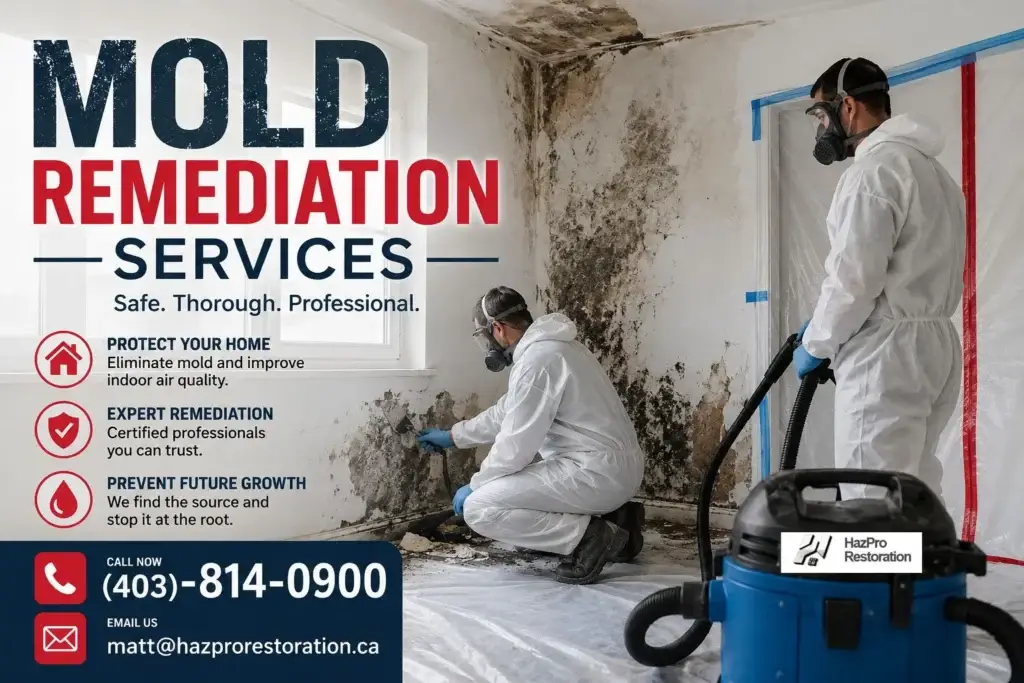
Mold can be a sneaky type of problem, and while it may be lurking in your home, it won’t be one if you have it addressed. Things like leaks and floods, condensation, poor ventilation, and high humidity can lead to mold growing inside your house. If you can smell it, see it, or feel that it’s around it’s time to stop hiding behind the mask and deal with it. Professional mold remediation services can take care of not only the mold itself, but the underlying issue that allowed it to begin growing in the first place, which Health Canada recommends as being vital to a proper restoration, as otherwise, simply removing the mold may be doing little to stop it. What is Mold Remediation? Mold remediation refers to taking care of an issue with regards to mold, including things such as the underlying causes, the removal of the mold itself, and the cleaning of the area to ensure that it doesn’t return. While simply removing the mold you see may seem like enough, there may be other points of concern that could be contributing that you’re simply not aware of, including other areas of mold that may not be directly apparent such as inside the walls or ceiling, or even an odd smell that has no obvious source. When Should You Hire Professionals While small spots on hard surfaces may be cleanable, more serious mold problems, frequent mold issues, water damage, or other concerns may require a professional remediation service According to Health Canada, professional mold remediation services should be contacted for cases with clearly visible large mold infestations that are greater than 3 square meters as they’re able to properly clean the mold off the surface and check for any underlying issues, and also if the mold keeps coming back or has gotten into the walls, ceilings, or floors. With a mold remediation professional, they’re able to handle the problem correctly rather than simply cleaning what you can see. (Canada) Mold Removal vs Mold Remediation Looking at the terms ‘mold removal’ and ‘mold remediation’, you may notice the slight variation in terms, but they largely refer to the same thing. While mold removal refers more to physically getting rid of the mold, remediation refers more to tackling the underlying causes in addition to physically removing it. The same goes for the British counterparts of these terms, which are spelled ‘mould removal’ and ‘mould remediation’. When looking at either term, it’s important to understand that while simply physically removing the mold is part of the equation, it shouldn’t be the full plan of action because there are likely a number of underlying problems that need to be addressed before this can be considered truly remediated. Why a Mold Inspection in Calgary Can Help While simply looking around may seem enough, there may be some things you’re simply not able to see, even if you know what to look for. Looking in places that are commonly associated with moisture is a good place to start, including things such as bathrooms, basements, areas around windows, on pipes, on ceilings, or any other area that may have seen leakage or other water damage in the past. When it comes to looking for mold inspection Calgary services, it’s important to note that those that offer both a moisture inventory assessment and a visual inspection are best, as Health Canada advises that taking an air-sample test isn’t actually recommended for checking for indoor mold as it’s unnecessary, and it’s better to pay attention to things such as visible mold growth and any areas of concern that may have moisture. Can I Do My Own Mold Remediation? For smaller spots of mold, it’s possible that it’s something you can clean yourself, provided that you pay attention to any precautions that should be taken to ensure that it doesn’t come back. According to Health Canada, small or even some medium mold infestations can be cleaned by yourself, provided that you know what you’re doing when it comes to cleaning it. Larger mold growths, recurring mold problems, mold that you can’t actually see, and any water damage situations are best left to the professionals, however. If you’re unsure of the extent of a mold issue you’re facing, it’s always better to contact a professional remediation service. What are the Signs of Mold Sickness Mold can generally cause things such as irritation to the eyes, nose, and throat; coughing and wheezing; shortness of breath, allergic reactions, and increased asthma symptoms, among other things, but it’s generally not the sole culprit for these issues, and if you feel that you could be suffering from mold poisoning, it’s best to consult a medical professional about it. Can Mold be Remediated? When asking if a mold problem can be adequately addressed, it’s important to remember that while a full remediation of a mold infection is possible, there will still always be some mold spores in the air both indoors and outdoors. The point of a mold remediation is to get rid of any visible mold infections and address any moisture damage, while also ensuring that the conditions that caused them aren’t present anymore, as otherwise, it’s likely to come back. (US EPA) What are the 10 signs of mold toxicity? While on the internet, you may have come across the concept of ‘mold toxicity’, it’s important to be careful when it comes to any symptoms you may or may not be experiencing, as not every symptom that’s been tied to mold toxicity has actually been proven to be a result of it. With that being said, indoor molds have been proven to cause a number of issues, including things such as: These symptoms should be discussed with a medical professional if you feel they could be applicable to your case, but always leave diagnosing to the professionals. Also Read: Mold Removal in Calgary Protect Your Home with Professional Mold Remediation Services How to Prevent Mold From Coming Back Now that you’ve